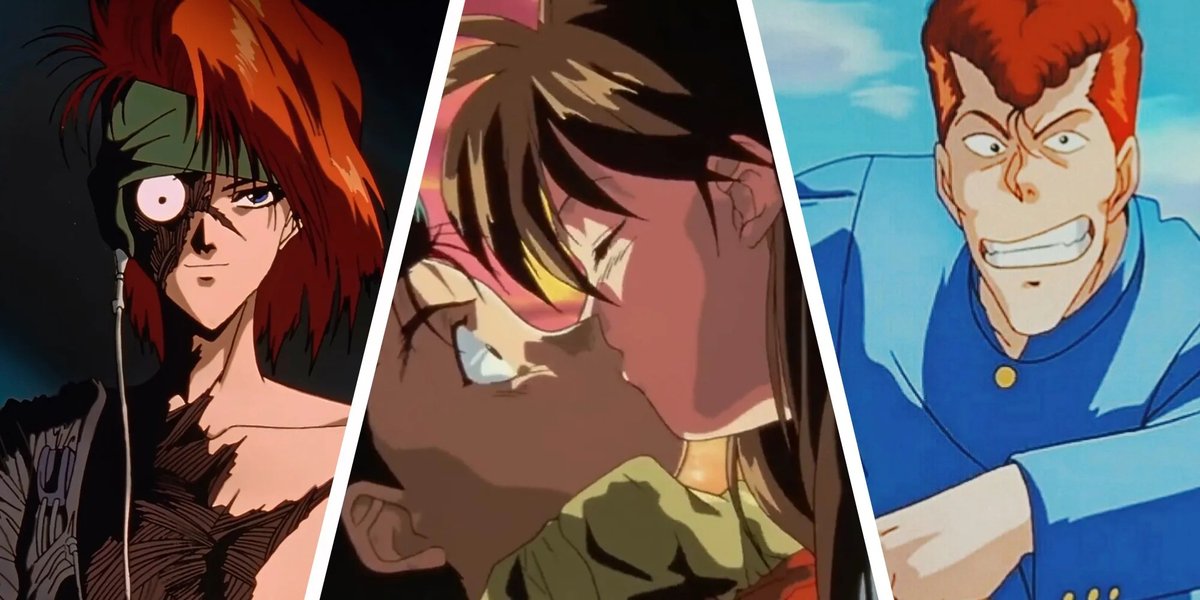
When we talk about Ichigo Kurosaki, the fiery protagonist of Bleach, it's easy to get lost in the intricate tapestry of his unique heritage – a powerful blend of Shinigami, Quincy, and Hollow abilities that makes him one of shonen's most compelling heroes. Yet, Ichigo's story and even his very essence extend beyond his in-universe bloodlines. To truly understand the heart of Ichigo's character and the world of Bleach, we need to look back at the giants of shonen anime that paved the way, specifically the groundbreaking work of Yoshihiro Togashi's Yu Yu Hakusho.
This isn't just a casual nod; it's a foundational influence. Yu Yu Hakusho, a definitive series from the early 1990s, set benchmarks for character archetypes, narrative structure, and spiritual battles that continue to resonate across generations of manga and anime. For Ichigo, in particular, the echoes are undeniable, revealing a deeper connection that anchors him not just in his own lore, but in a rich lineage of shonen heroes.
Beyond Bloodlines: Ichigo's Spiritual Roots in Shonen History
While Ichigo's complex family tree, with his Shinigami father Isshin Kurosaki and pure-blooded Quincy mother Masaki, explains his immense power and unique abilities like the instinctive use of Blut Vene, his character's genesis taps into something even older. His Shinigami lineage connects him to the noble Shiba family, making him a cousin to figures like Kukaku and Ganju, and explaining the shared "heart" concept with the late Kaien Shiba. His Quincy heritage is equally significant, even leading Quincy king Yhwach to refer to him as "my son lost in the darkness." And let's not forget the "White" Hollow, indirectly created by Aizen, which became Ichigo's Inner Hollow and part of his dual Zangetsus. This internal complexity, while fascinating, is a testament to Bleach's specific narrative, but his external persona, his very role as a hero, draws from a much broader influence.
Tite Kubo, Bleach's mangaka, crafted Ichigo with distinct traits that align uncannily with a certain influential predecessor. It’s in these shared characteristics that we find the true connection, offering a fascinating lens through which to appreciate Bleach even more.
The Yusuke Urameshi Blueprint: Ichigo's Troubled Hero Persona
Look closely at Ichigo, and you'll see shades of another iconic shonen protagonist: Yusuke Urameshi from Yu Yu Hakusho. Both characters burst onto the scene as outwardly rough, rebellious troublemakers, notorious for their schoolyard brawls and defiant attitudes. Yet, beneath that tough exterior lies a fiercely loyal heart, deeply protective of their friends and family. This core motivation, driven by unwavering affection for their loved ones, fuels their journey into the supernatural. Their initial foray into spiritual affairs is often unexpected and thrust upon them, with Ichigo gaining Shinigami powers from Rukia and Yusuke becoming a Spirit Detective after a selfless act. If you're intrigued by how these two iconic characters mirror each other's paths and personalities, you'll want to Dive deeper into the striking parallels between Ichigo Kurosaki and Yusuke Urameshi's journeys.
Echoes of Togashi: World-Building and Spiritual Realms
The similarities don't end with character archetypes; they extend to the very fabric of their respective worlds. Both Bleach and Yu Yu Hakusho plunge their protagonists into realms beyond the mundane, where spiritual entities and intricate power systems govern existence. Ichigo navigates the Soul Society, a spirit world inhabited by Shinigami, Hollows, and Quincies, while Yusuke delves into the Underworld, a vibrant landscape filled with demons, spirits, and the bureaucracy of the Spirit World. Both series deftly weave action-packed battles with explorations of unique spiritual societies, creating expansive and memorable settings. Understanding the nuances of these supernatural domains enriches the viewing experience, and you can Compare the spiritual realms and their roles in both Bleach and Yu Yu Hakusho to see how these fantasy worlds were constructed.
The Far-Reaching Shadow: Yu Yu Hakusho's Broader Shonen Legacy
The influence of Yoshihiro Togashi's Yu Yu Hakusho isn't confined to Bleach alone; it cast a long shadow over the entire shonen landscape, inspiring a generation of mangaka. Its inventive action, complex characters, and emotionally resonant storytelling became a blueprint for countless series that followed. This widespread impact underscores Yu Yu Hakusho's status as a seminal work in the genre. For a comprehensive look at how this series shaped the very fabric of popular shonen, Explore the widespread influence of Yu Yu Hakusho on the shonen genre.
Inspiring Icons: Character Archetypes and Design Cues
The impact is perhaps most clearly seen in direct character inspirations. Masashi Kishimoto, the creator of Naruto, explicitly cited Hiei from Yu Yu Hakusho as a direct inspiration for his popular anti-hero, Sasuke Uchiha. The dark, brooding demeanor, prodigious talent, and complex motivations shared by Hiei and Sasuke are no coincidence. Even the naming conventions in Naruto hold a nod to Togashi's work, with the Nine-Tails beast being named "Kurama," a direct reference to the elegant and powerful demon from Yu Yu Hakusho. This shows how deep the roots of influence run, touching specific design choices and character dynamics. To appreciate these subtle yet significant connections, be sure to Uncover how Yu Yu Hakusho's character designs inspired Bleach and Naruto's iconic figures. Moreover, the very archetype of the "troublemaker hero" — characters like Ichigo and Yusuke who defy conventions but fight for what's right — has become a beloved staple in shonen. Understanding why this type of protagonist resonates so deeply with audiences offers crucial insights into successful character development, and you can Examine the enduring appeal of the 'troublemaker hero' archetype in shonen anime for a deeper analysis.
Ichigo Kurosaki's journey is undeniably unique, defined by his incredible lineage and the arduous battles he fights. However, acknowledging his spiritual connection to predecessors like Yusuke Urameshi and the broader influence of Yu Yu Hakusho enriches our understanding of Bleach as a whole. It’s a testament to the enduring power of storytelling and how creative works build upon each other, forming a continuous, inspiring dialogue across the shonen landscape. By appreciating these connections, we don't just celebrate individual series; we celebrate the vibrant, evolving legacy of anime itself.